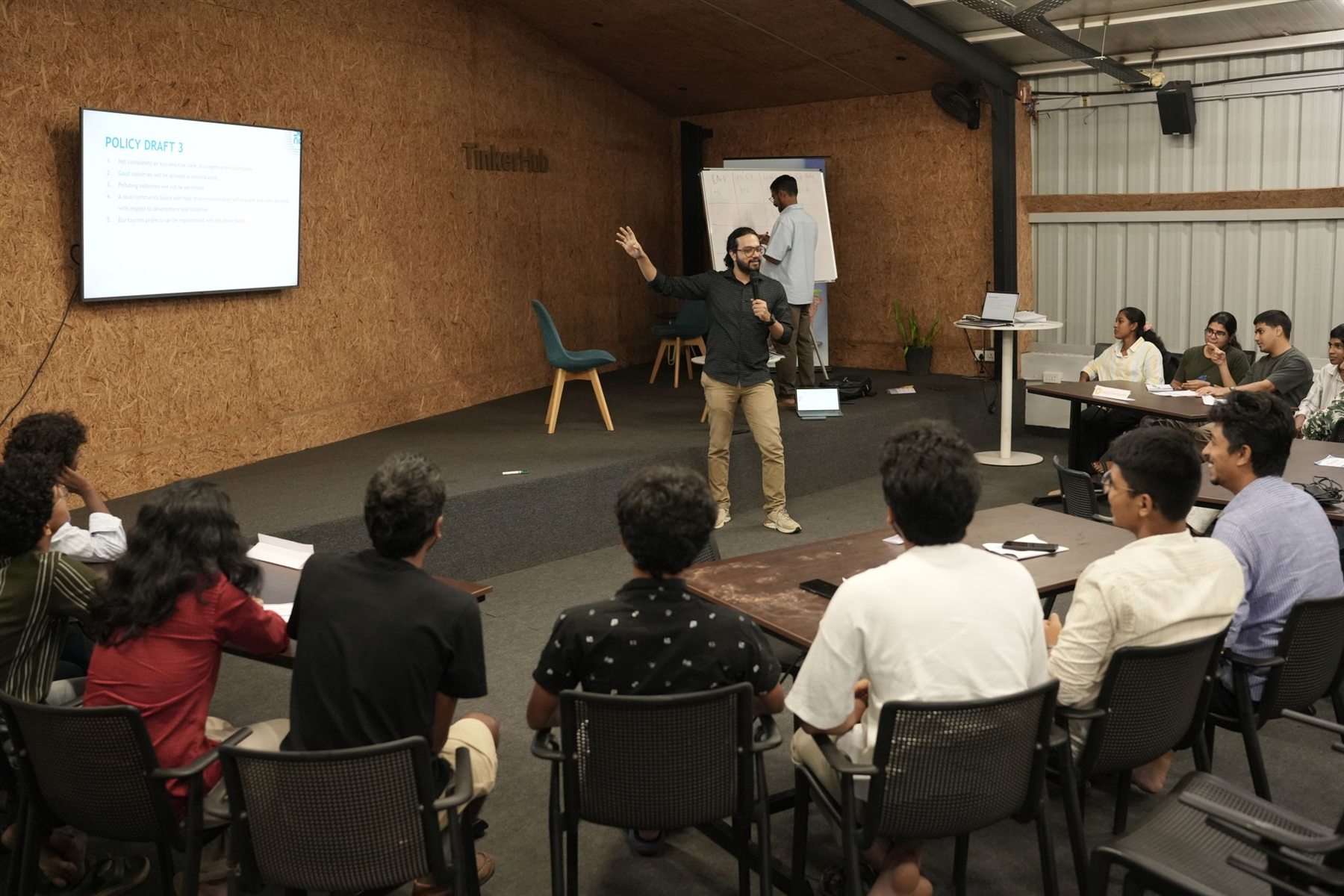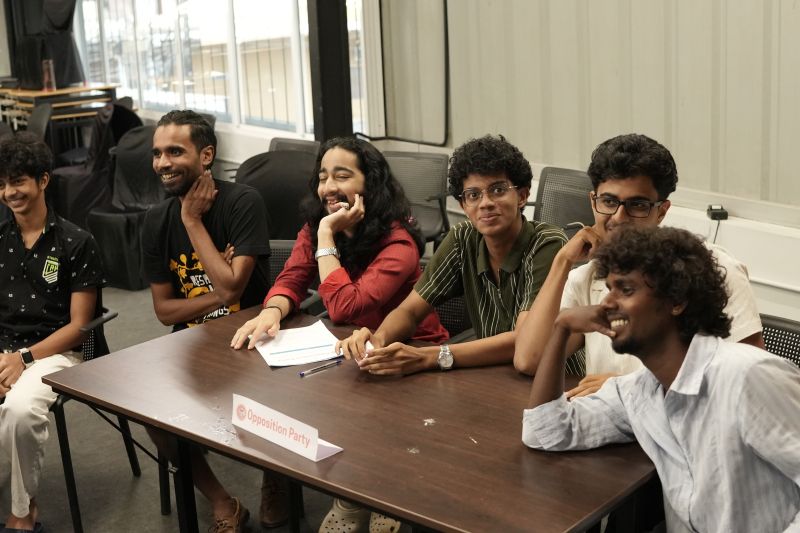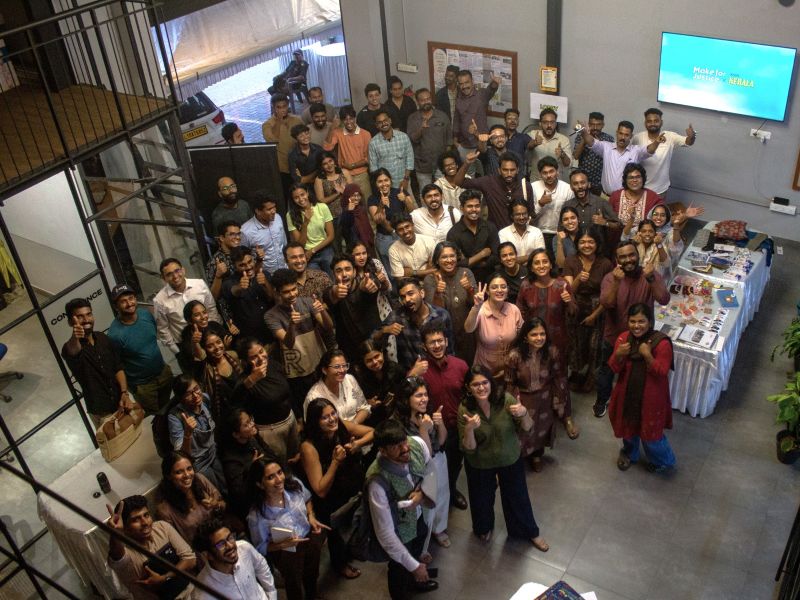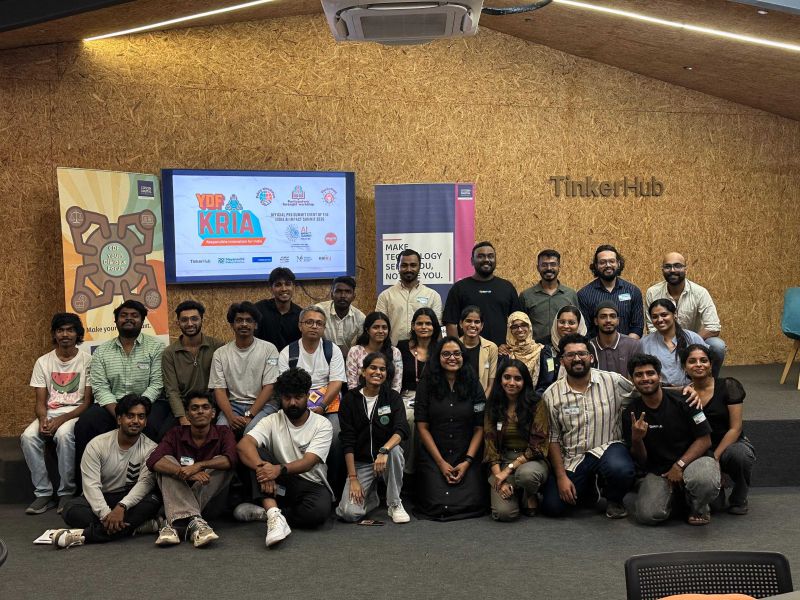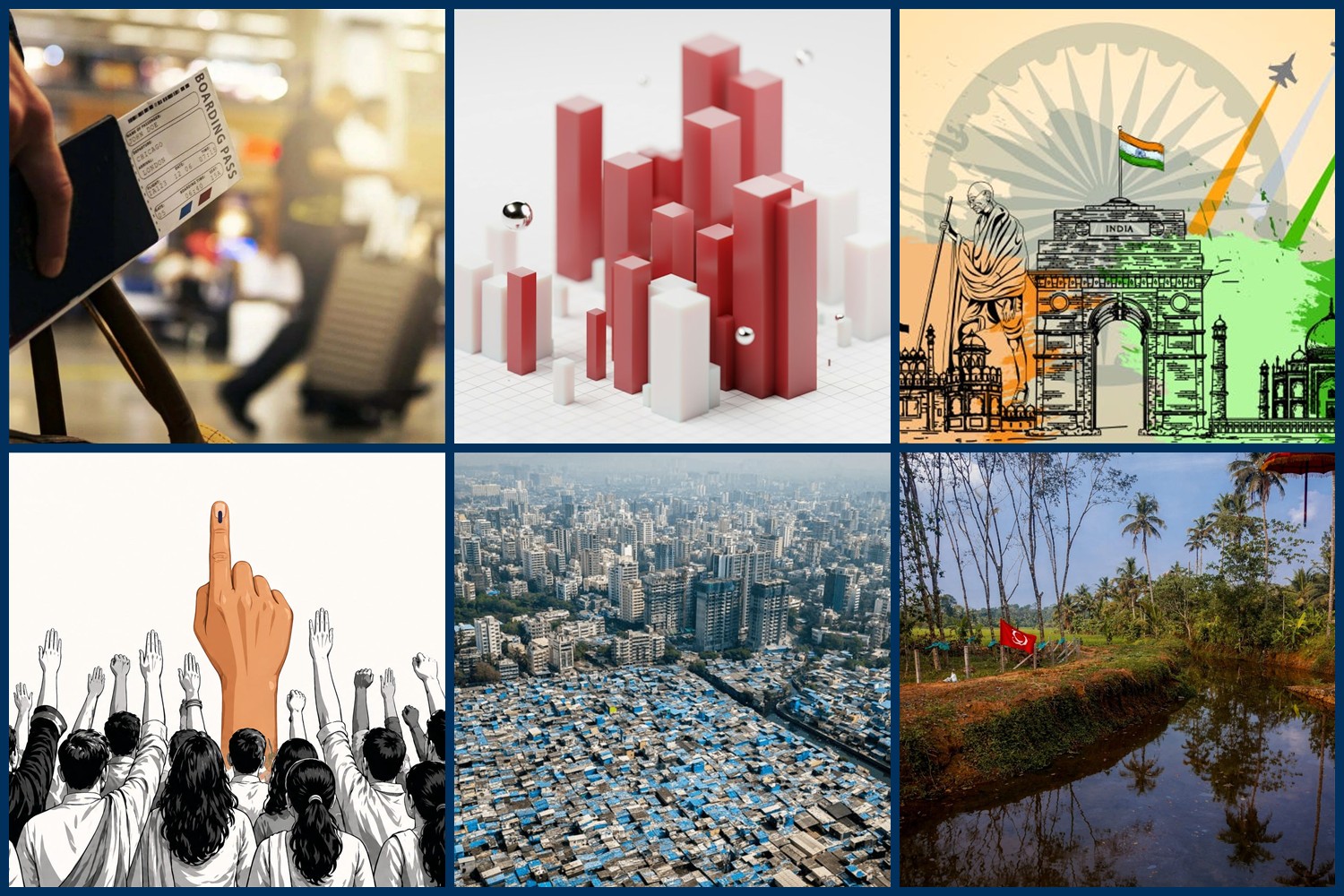
A role-play game in which stakeholder groups bargain over a policy and find that every win costs something. Played at Make for Justice, the Multispecies Hackathon and YDF KRIA.
Why
“There are no solutions. There are only trade-offs.” — Thomas Sowell
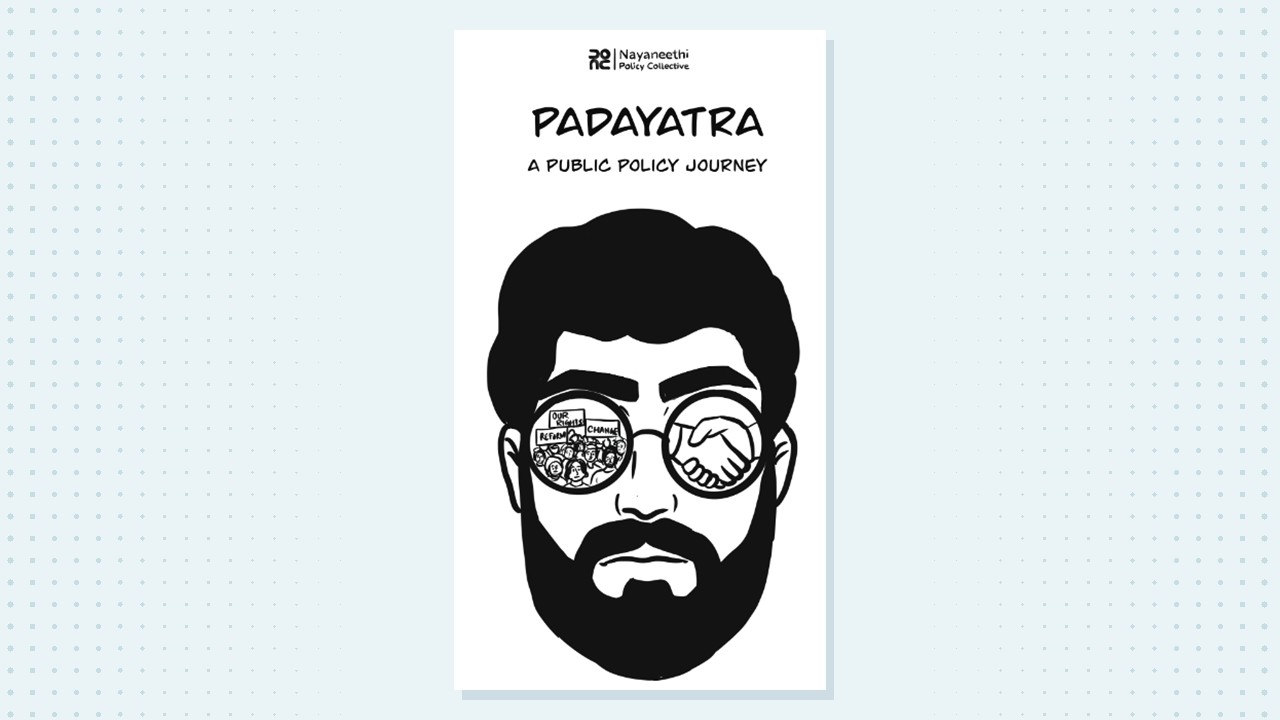
Reading about trade-offs is one thing; having to make one is another. Like Vipin in our comic Padayatra, players learn that no group gets everything it wants from a policy, and that getting something often means giving something up.
How it works
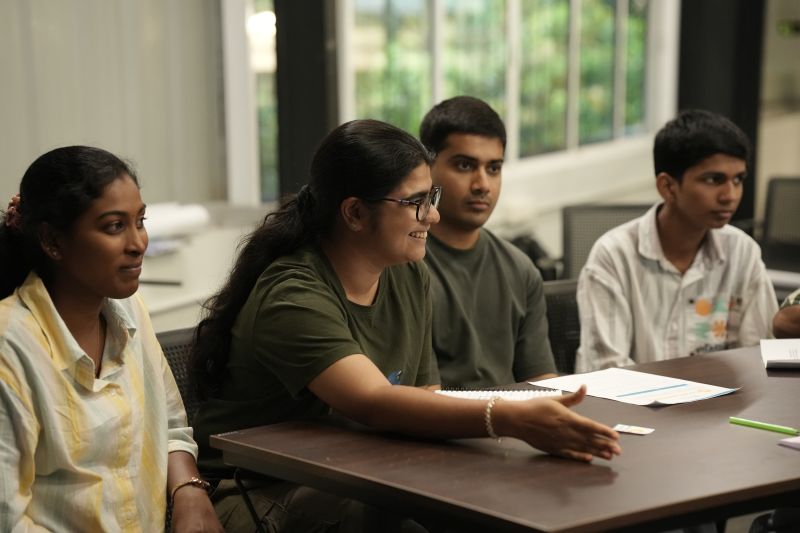
Participants are split into stakeholder groups, each with interests it wants to protect. They score points for every interest that makes it into the final policy, but the policy only passes if enough groups vote for it. So they negotiate, compromise and build alliances, weighing what they want against what it takes to get the policy through.
At Make for Justice, for example, the question was student migration from Kerala’s higher education system. Five groups (colleges, students, industry, civil society and the opposition) bargained while a “government” drafted the policy and put it to a vote.
Where we’ve played it
- Make for Justice, Kochi (August 2025). We co-hosted Kerala’s first Make for Justice gathering with Agami, TinkerHub and The Ignite Foundation at TinkerSpace Kochi, and piloted the game there. Students from our public policy course helped design and run it.
- YDF KRIA, Kochi (January 2026). At this programme on responsible AI, co-hosted with Citizen Digital Foundation, students from tech and non-tech backgrounds played the game on using AI to distribute welfare.
- Multispecies Hackathon, Kochi (May 2026). At the hackathon by Socratus and TinkerHub, the game turned to environmental policy, built on Civis’s public consultation on the Peachi-Vazhani eco-sensitive zone.
What’s next
We are developing it into a full public policy game for classrooms, workshops and civic spaces. If you’d like to co-develop or support it, get in touch.